Which powder format should your brand choose?
The format that fits your serving size, your channel, and your first-order capital, in that order.
Jars suit powders with servings above roughly 15 grams and a scoop-based ritual: protein, meal replacement, mass gainer, collagen, most pre-workout. Stick packs suit low-gram, on-the-go servings: electrolytes, hydration, greens, single-serve creatine. Bulk suits brands selling to gyms, clinics, repackers or other manufacturers, where the buyer supplies their own container.
Most brand owners start from the consumer side, which format looks better on a shelf. That is the wrong entry point. Powder format is decided by physics and unit economics first. A 30-gram protein serving in a stick pack is technically possible and commercially indefensible: packaging cost per serving rises several times over. A 6-gram electrolyte serving in a 700-gram jar is equally awkward: the jar sits three-quarters empty.
Serving size decides the format before preference does
Serving size in grams is the single variable that eliminates most options before any preference is considered.
Serving weight | Typical products | Format that fits | Format that fails |
3–10 g | Electrolytes, hydration, greens, creatine, single-serve collagen | Stick pack | Jars hold too many servings per purchase cycle |
10–20 g | Collagen, fiber, mushroom blends, some pre-workout | Jar or stick pack — channel decides | Bulk, unless selling B2B |
20–50 g | Whey and plant protein, meal replacement, mass gainer | Jar | Stick pack cost destroys margin |
Any weight, no retail container | Ingredient supply, gym and clinic dispensing, co-packing | Bulk | Retail formats add cost the buyer won’t pay for |
Run your own number before reading further. Multiply serving weight by target servings per unit. A 25-gram protein serving at 28 servings is 700 grams, a standard jar fill. A 6-gram electrolyte serving at 30 servings is 180 grams, which fits a jar but produces a container that looks under-filled and travels badly. That single calculation resolves most format questions in under a minute.
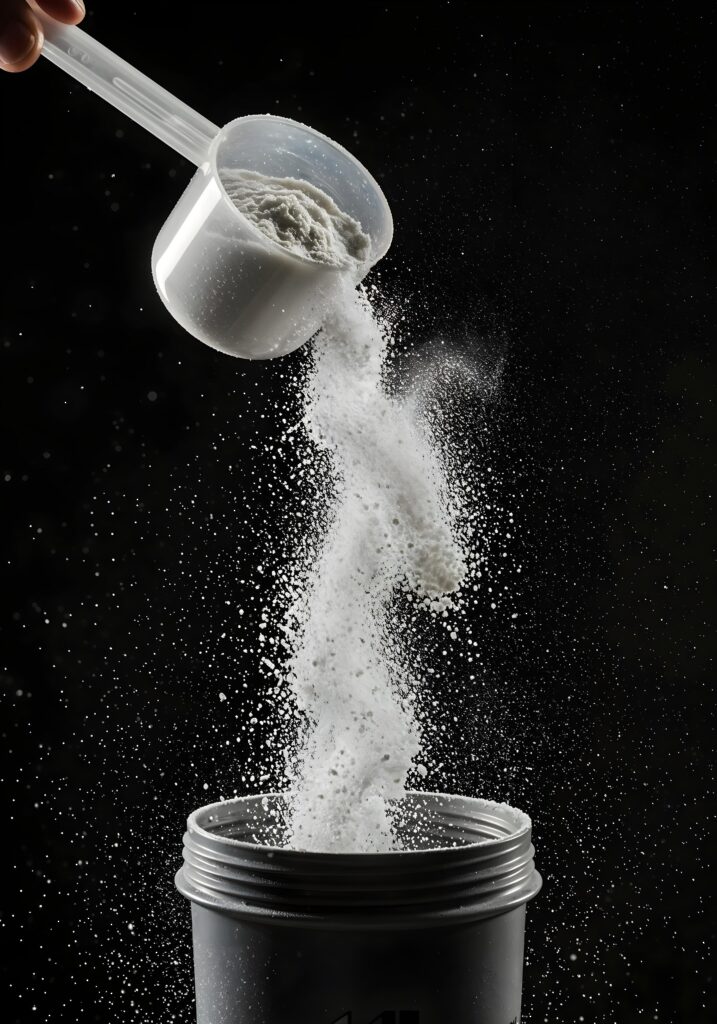
When jars are the right powder format
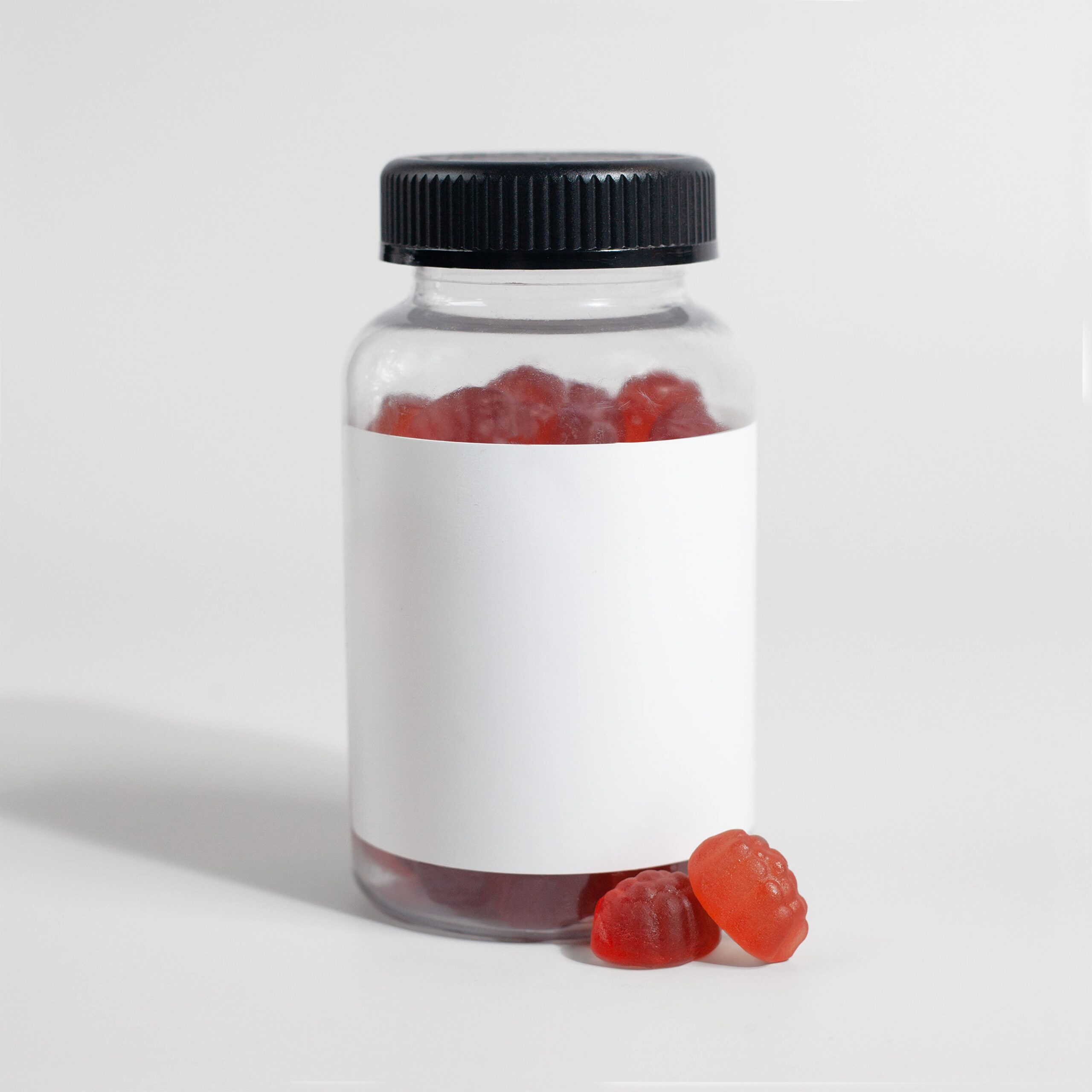
Jars are correct when a serving is large; the consumer uses the product daily at home, and the brand needs the lowest packaging cost per serving.
A jar spreads one packaging cost across every serving inside it. At 28 servings, the container, lid, label and seal are amortized across 28 doses, no other powder format is that efficient, which is why protein and meal replacement brands stay in jars.
HH Processors fills powder jars up to 700 grams, with a minimum of 500 jars per SKU. That combination sets two numbers to know before quoting. First, 700 grams determine servings per jar: 28 at a 25-gram serving, 23 at 30 grams. Second, 500 jars at 700 grams is 350 kilograms of finished blend, the actual size of your first run, and the number that drives your first invoice.
Jars carry three disadvantages. They ship expensively, because carriers bill on dimensional weight, and a jar is mostly air by volume. They expose hygroscopic ingredients (creatine, electrolyte salts, glycine) to humidity every time they are opened, which causes clumping and returns. And they are inconvenient outside the home.
When stick packs are the right powder format
Stick packs are correct when the serving is small, the use occasion is away from home, and the consumer pays a premium for convenience and dosing accuracy.
A stick pack removes the scoop and its dosing error, protects each serving from moisture until use, and travels in a gym bag or laptop sleeve. This is why the electrolyte and hydration category converged on stick packs almost entirely.
But stick packs invert the packaging economics of a jar. In a jar, one container serves 20 to 35 doses. In a stick pack, one package serves exactly one dose, packaging cost per serving stays flat and is multiplied by every serving sold.
On low-cost powders like electrolytes, the film and filling can represent a larger share of unit cost than the actives. The rule: stick packs make sense only when the consumer pays a convenience premium that exceeds the added packaging cost. Electrolytes clear that bar; a 30-gram protein serving does not.
Capability note: Stick pack and sachet filling runs on dedicated equipment that is not present on every powder line. Confirm availability and film specification early, because it can determine which line your SKU runs on and therefore your lead time.
When bulk powder is the right format
Bulk is correct when your buyer is a business rather than an end consumer, and packaging adds cost that buyer will not pay for.
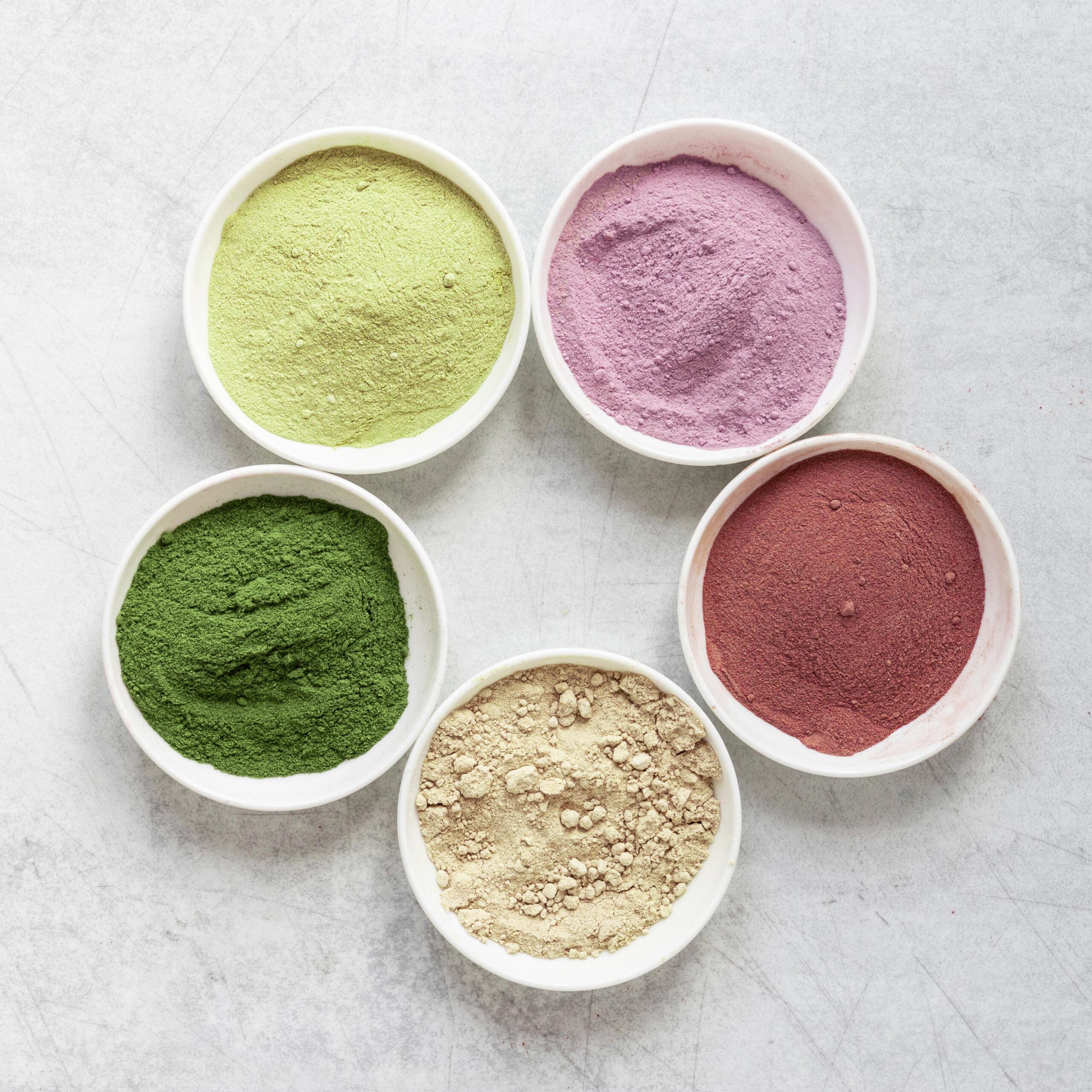
Bulk powder ships in drums, barrels, boxes or lined sacks and skips retail packaging entirely. It serves ingredient supply, gym and clinic dispensing, staged co-packing, and multi-SKU brands consolidating one base blend across several formats. It carries the lowest cost per kilogram of any format and no brand equity, a bulk buyer purchases a specification and a certificate of analysis, not a story.
One use deserves attention for newer brands: if your artwork is not finished but your ingredient pricing is favourable now, producing the blend in bulk and packaging in a second stage lets you lock the ingredient cost without freezing the launch behind a design cycle.
Powder format comparison: MOQ, cost and lead time
| Jars | Stick packs | Bulk |
Best-fit serving | 15–50 g | 3–15 g | Any |
Fill capacity | Up to 700 g per jar | Single serving per stick | Drums, barrels, boxes, sacks |
Minimum order | 500 jars per SKU | Confirm per line | Priced by weight |
Packaging cost per serving | Lowest | Highest | Effectively zero |
Shipping efficiency | Poor — dimensional weight | Strong — flat and dense | Strongest per kilogram |
Best channel | Retail, DTC, Amazon | DTC, travel, Amazon, events | B2B, wholesale, practitioner |
How format changes MOQ and flavor development cost
Powder MOQs are set in kilograms of blend, not units. Three thresholds define the category:
- Finished powder — 500 jars per SKU (350 kg at a 700 g fill). The entry point for a labelled, retail-ready product.
- Custom formula — 750 kilograms of powder. A formula built from scratch roughly doubles the ingredient spend, which is why many first-time brands launch on an adapted stock formula and move to fully custom on a later run.
- Bulk — priced by weight. The constraint becomes batch size, not unit count.
Flavor is the largest R&D variable, and it is priced separately from the blend:
Development type | Indicative R&D cost |
Unflavored blend | $600 |
Flavored powder | $1,000 |
Complex formulation | Up to $2,800 |
Flavored powder costs more because flavor is not solved on the first attempt. HH Processors typically develops three to four flavor candidates before approval.
Bitter actives need masking systems that shift with concentration, and a stick pack amplifies any off-note by delivering a concentrated dose into a small volume of water. Budget flavor development as a discrete line item, and expect a calendar cost as well as a financial one.
How format affects shipping and Amazon FBA
Format determines freight cost per unit, and freight is what most often erodes a powder brand’s margin after launch.
Carriers bill on dimensional weight when it exceeds actual weight. A rigid jar is dense but packaged with substantial air volume, so it frequently bills above its true weight; a stick pack box holding the same servings is flatter and often bills lower.
For Amazon FBA this compounds, a jar that crosses a size tier carries that penalty on every unit for the life of the SKU. Run the size-tier calculation before approving a container.
HH Processors ships finished powder directly to Amazon and Walmart fulfillment centers, removing a transload step. Production runs include microbial and heavy metal testing with a certificate of analysis per batch; potency testing and safety data sheets are available at additional cost.
A six-question framework for choosing your format
What is one serving, in grams?
Under 10 g points to stick packs, over 20 g to jars.
Where is the product consumed?
At home points to jars, away from home to stick packs.
Who is the buyer?
A business that repackages or dispenses points to bulk.
Is the formula hygroscopic?
Creatine, salts and glycine argue for single-serve protection.
What is the first-order capital?
500 jars is 350 kg of blend; a custom formula is 750 kg.
What does the channel charge to ship it?
Run the Amazon size tier before the container is approved.
Frequently asked questions
What is the minimum order for private label powder?
500 jars per SKU for finished powder (350 kg of blend at a 700 g fill). A fully custom formula carries a 750-kilogram minimum.
How much does flavor development cost?
Around $600 unflavored, $1,000 flavored, up to $2,800 for complex formulations, typically including three to four flavor candidates.
How long does powder production take?
Approximately six weeks for white label and seven to eight for private label. R&D sits ahead of that window.
What testing is included?
Microbial and heavy metal testing with a certificate of analysis per batch. Potency testing and safety data sheets are available at additional cost.